Launching a meme coin on Solana has become much easier than it once was. A creator can introduce a token, make it available for trading, and start building a community without necessarily arranging a traditional liquidity pool from day one.
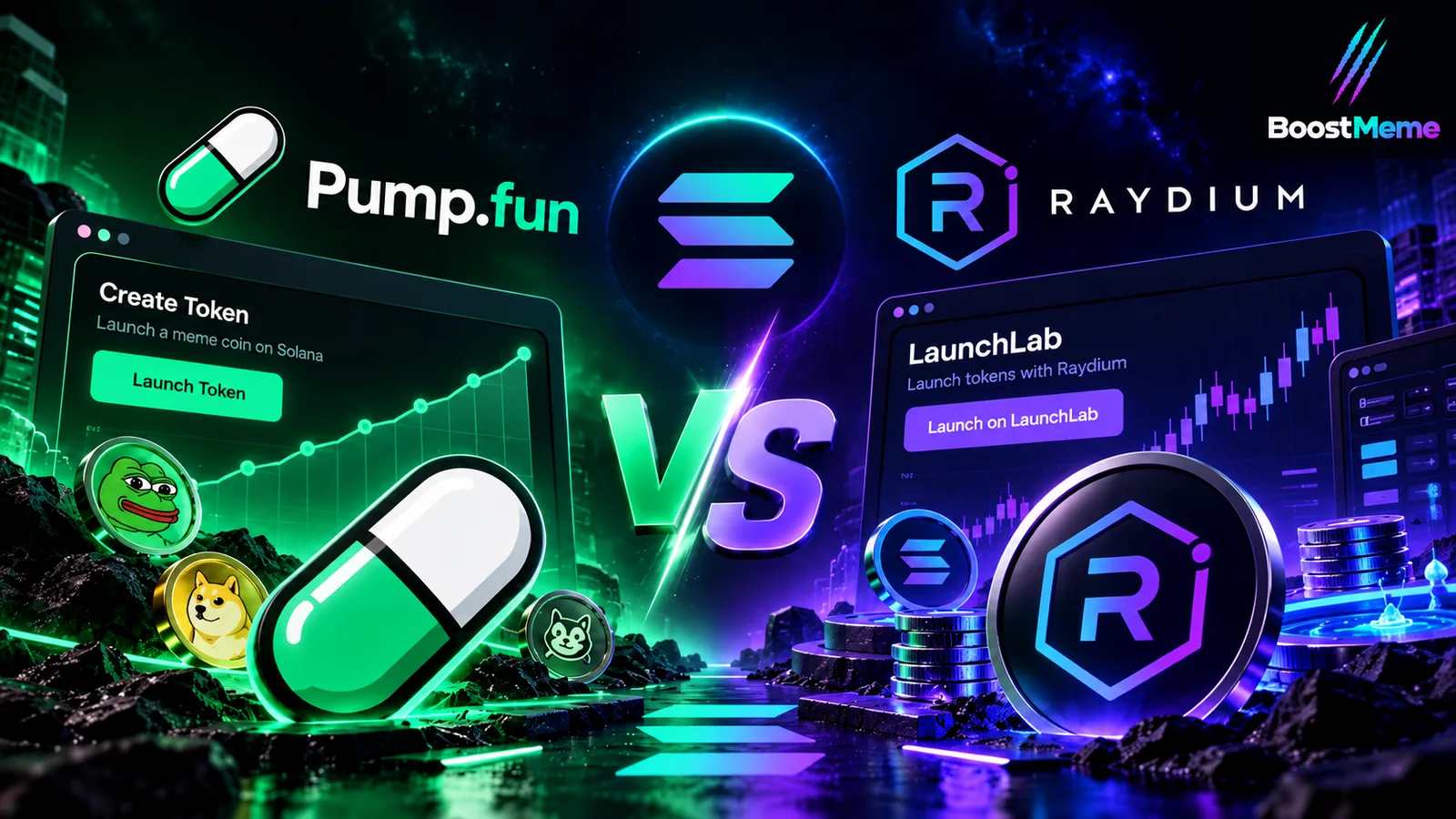
Two names often come up in this process: Pump.fun and Raydium. Both provide infrastructure for launching and trading tokens, but their launch mechanisms are not identical.
One distinction matters from the beginning: this comparison looks at Pump.fun’s native launch process and Raydium’s LaunchLab. Raydium is a broader trading protocol, so comparing Pump.fun with Raydium as a whole would overlook the specific role LaunchLab plays.
Here is how the two approaches work, what happens when a token completes its initial launch phase, and what creators should consider before choosing a route.
What Is a Bonding Curve?
Before comparing the platforms, it helps to understand one concept: the bonding curve.
A bonding curve is a pricing mechanism that determines the price at which a token can be bought or sold according to the curve’s current state. As people buy tokens, the price generally moves upward along the curve. Selling tokens moves it in the opposite direction.
This gives a newly launched token a defined trading mechanism without requiring the creator to set up a conventional automated market maker pool at the very beginning.
However, a bonding curve does not guarantee demand, healthy trading activity, or a stable price. A token can launch successfully and still struggle to attract sustained interest.
The bonding curve is the starting point for understanding both Pump.fun and Raydium LaunchLab.
How Pump.fun Works
Pump.fun lets creators launch tokens that can begin trading against a bonding curve. The process is designed to make token creation and early trading accessible without requiring the creator to provide a traditional two-sided liquidity pool upfront.
During the initial phase, buys and sells take place against the token’s bonding curve. The curve determines pricing based on its reserves and the amount being traded.
As trading progresses, the token may eventually reach the completion threshold defined by Pump.fun’s mechanism.
What Happens When a Pump.fun Token Graduates?
When a token reaches the required bonding-curve threshold, its liquidity transitions to PumpSwap, Pump.fun’s automated market maker.
This is an important detail because older discussions of Solana meme coins sometimes describe a migration to Raydium. That is not the destination in Pump.fun’s current native launch flow: the transition is to PumpSwap.
After the transition, trading takes place through the resulting pool rather than the original bonding curve.
For creators and traders, the practical takeaway is simple: launching a token and completing its initial curve phase are parts of a defined process, but neither event guarantees that the token will attract more buyers or maintain its price.
For more technical details, see Pump.fun’s bonding-curve documentation.
How Raydium LaunchLab Works
Raydium LaunchLab is a token-launch mechanism within the broader Raydium ecosystem. Like Pump.fun, it can use a bonding curve for a token’s initial trading phase.
Creators can choose between launch paths with different levels of configuration. The available settings depend on the selected mode and platform configuration, so creators should check the current options rather than assume every LaunchLab launch works identically.
During the initial phase, trading takes place against the configured curve. When the launch satisfies its graduation conditions, the token transitions to a Raydium constant product market maker (CPMM) pool.
That pool then supports trading through Raydium’s standard pool infrastructure.
Why Does the Migration Matter?
The initial launch phase and the post-graduation pool are different stages of the token’s trading lifecycle.
The bonding curve handles early trading according to its own pricing mechanism. After graduation, a pool operates under the rules and configuration of the destination AMM.
Liquidity handling, fee arrangements, and the treatment of liquidity provider (LP) positions can depend on the applicable launch configuration and protocol rules. Creators should review those details before launching instead of assuming that every token receives the same treatment.
You can review the technical process in Raydium LaunchLab’s official documentation.
Pump.fun vs. Raydium LaunchLab: Key Differences
Although both platforms use bonding curves for initial token trading, their launch processes and post-graduation destinations differ.
1. Initial Trading
Pump.fun:
Tokens begin trading through Pump.fun’s bonding-curve mechanism, which determines pricing as buying and selling activity changes the curve’s state.
Raydium LaunchLab:
Tokens also begin with a configured bonding curve. Available launch options and parameters depend on the selected launch mode.
2. What Happens After Graduation?
Pump.fun:
Under its native launch flow, a token that completes the bonding curve transitions to PumpSwap, Pump.fun’s automated market maker.
Raydium LaunchLab:
A token that meets the applicable graduation conditions transitions to a Raydium CPMM pool.
3. Launch Configuration
Pump.fun:
Creators follow Pump.fun’s launch process and the configuration options it makes available.
Raydium LaunchLab:
LaunchLab provides different launch paths and configuration options, depending on the selected mode.
4. Liquidity and Fees
Pump.fun:
The applicable trading and liquidity rules are governed by Pump.fun’s bonding-curve mechanism and PumpSwap after graduation.
Raydium LaunchLab:
Pool behavior, liquidity arrangements, and applicable fees depend on LaunchLab’s rules and the configuration of the resulting Raydium pool.
Always check the latest official documentation before launching, as protocol parameters and fees can change.
Which One Should You Choose?
Neither option is automatically better for every project. Compare the launch workflow, available configuration options, applicable fees, and post-graduation liquidity arrangements before deciding.
Most importantly, remember that completing a launch or graduating from a bonding curve does not guarantee demand, trading volume, or price appreciation.
Which Launch Method Is Better?
There is no universal answer. A launch method that suits one project may be a poor fit for another.
Before deciding, consider the following questions:
How much configuration do you need?
If you want a straightforward launch flow, examine the steps and defaults of the available launch mode. If you need more control over parameters such as the curve, supply allocation, vesting, or post-graduation arrangements, review the configuration options available to you.
Where will the token trade after graduation?
Understand which protocol will handle the post-graduation pool, and review the relevant fees and liquidity rules. Do not rely on old tutorials that may describe an earlier migration path.
What are the actual costs?
Review current creation costs, trading fees, graduation or migration-related costs, and any other applicable charges. These can change, so confirm them directly on the platform.
What happens after launch?
A technically successful launch is only one part of building a project. A token still needs clear communication, a recognizable identity, an engaged community, and a responsible plan for reaching potential audiences.
A launch platform provides infrastructure. It does not create a loyal community or guarantee demand by itself.
Launching a Meme Coin Is Only the First Step
It is easy to spend most of a project’s early effort on the token itself: its name, ticker, logo, launch timing, and initial trading setup.
Those decisions matter, but they are not the entire project.
Once a token is live, potential community members need a reason to learn about it. They may want to understand the project’s story, find its official social channels, assess the team’s communication, and decide whether the project deserves their attention.
A practical post-launch plan can include:
- A clear project narrative. Explain what the token is, what inspired it, and what the community can expect from the project without making unrealistic promises.
- Consistent communication. Keep official social profiles and project information accurate, and make it easy for people to identify genuine channels.
- Relevant community outreach. Share useful, clearly presented information in communities where that kind of content is welcome. Avoid spam, fake engagement, and misleading claims.
- Ongoing attention to trust. Be transparent about risks, token details, and what the project does—and does not—offer.
Promotion can support these efforts by helping a project reach relevant audiences. It cannot replace a credible project or guarantee that people will buy the token.
How BoostMeme Fits Into a Post-Launch Strategy
For teams launching a Solana meme coin, BoostMeme offers promotional options designed to help projects increase visibility through token placement, promotional campaigns, and crypto community outreach.
The idea is to support the communication that comes after launch: giving a project more opportunities to present its identity and reach people who may be interested in learning about it.
The available services and campaign scope depend on the selected package. No promotional campaign can guarantee token purchases, price increases, trading volume, or financial returns.
If your token is already live and you are planning its next steps, you can explore BoostMeme’s promotion packages to see whether the available options fit your project’s needs.
A Final Checklist Before Launching
Before launching a Solana meme coin, take time to verify the essentials:
- Token details: Double-check the token name, ticker, metadata, and mint address.
- Launch configuration: Understand the bonding curve, graduation conditions, and available options.
- Post-graduation liquidity: Confirm which pool the token is expected to move to and review the applicable liquidity and fee rules.
- Project channels: Make sure your website and social profiles are accurate and clearly identified.
- Risk communication: Be honest about the speculative nature of meme coins and avoid promises of guaranteed returns.
A few careful checks can help prevent avoidable mistakes, although they cannot remove the financial risks associated with launching or trading a meme coin.
Frequently Asked Questions
Does a Pump.fun token automatically migrate to Raydium?
No. In Pump.fun’s current native launch flow, a token that completes its bonding curve transitions to PumpSwap. Raydium LaunchLab follows its own launch process and graduates qualifying tokens to a Raydium CPMM pool.
Is Raydium LaunchLab the same as Raydium’s entire trading platform?
No. LaunchLab is a token-launch mechanism within the larger Raydium ecosystem. Raydium also provides other trading and liquidity infrastructure, so a comparison with Pump.fun should specify which Raydium product or launch path is being discussed.
Does graduating from a bonding curve mean a token’s price will rise?
No. Graduation is a change in the token’s trading stage, not a guarantee of price performance. Market prices can rise or fall, and liquidity does not eliminate the risk of loss.
Is launching a token enough to build a successful meme coin project?
No. Launching makes the token available through a particular trading mechanism, but project awareness and community engagement require additional work. Clear communication, responsible promotion, and transparent project information can help people assess the project, but no marketing effort guarantees demand or financial success.
Sources and Further Reading
- Pump.fun — The Bonding Curve
- Pump.fun — Public Protocol Documentation
- Raydium — LaunchLab Overview
- Raydium — Creating a LaunchLab Token
This article is for educational purposes only and is not financial or investment advice. Meme coins are highly speculative and may lose substantial or all of their value. Always do your own research before making financial decisions.